
What Are SEO And Social Media Marketing Services?
SEO and social media marketing services are two important parts of digital marketing. They both help your business get found, trusted and chosen online — but they do it in different ways.
What Is SEO?
SEO stands for Search Engine Optimization. It is the process of improving your website so it can appear higher on search engines like Google when people search for products, services, questions or solutions related to your business.
SEO can help your business appear for searches such as:
- SEO services near me
- best dentist in London
- cleaning company in Manchester
- Shopify SEO expert
- local SEO services
- social media marketing agency
- plumber near me
- business consultant for startups
- real estate agent in [city]
What Is Social Media Marketing?
Social media marketing is the process of using platforms like Facebook, Instagram, LinkedIn, TikTok, YouTube, Pinterest and X to build awareness, engage your audience, share content, promote offers and generate leads.
Social media marketing can help your business:
- Build brand awareness
- Show personality
- Educate your audience
- Share client results
- Promote services
- Build trust
- Drive website traffic
- Generate enquiries
- Retarget interested users
- Stay visible in front of prospects
Why both matter
SEO helps people find you when they search. Social media helps people remember you before they search. That is why both matter.
Why Businesses Need Both SEO And Social Media
Most customers do not make decisions from one touchpoint. They may first see your business on social media, then check your website, then search your brand name on Google, then read your reviews, compare your services and return later to fill out a form. Your digital presence needs to work across multiple channels.
SEO helps capture demand
SEO captures people who are actively searching — a business owner searching "why is my website not ranking", "SEO agency for small business", "local SEO services" or "technical SEO audit". If your website ranks for these searches, you can attract users who already have a problem and are looking for a solution.
Social media helps create demand
Social media can reach people before they search. A business owner may not be actively searching for SEO services today, but they see your LinkedIn post about why their impressions are increasing but clicks are low. That post makes them think about their own website. A few days later, they search your brand name or visit your website. This is how social media creates awareness and trust before the buyer is ready.
Together they support the full buyer journey
SEO supports high-intent discovery. Social media supports awareness, trust and engagement. Together, they help your business appear at different stages of the customer journey. That is much stronger than relying on only one channel.
The Main Difference Between SEO And Social Media Marketing
SEO and social media marketing both help with visibility, but they work differently.
SEO is search-based
SEO depends on people searching for something. The user has a question, problem or need. Your website appears as a possible answer — for example "best SEO agency for small business", "how to improve Google rankings", "roofing company near me", "dentist in Chicago" or "Google Ads consultant". SEO is intent-driven — the user is already looking for something.
Social media is feed-based
Social media depends on content appearing in someone's feed. The user may not be searching for your service at that moment. Your content needs to capture attention, educate, entertain or build trust — a client result post, a short SEO tip, a behind-the-scenes video, a carousel explaining mistakes, a testimonial graphic, a founder story or a case study breakdown. Social media is attention-driven.
SEO is long-term compounding
Good SEO content can keep bringing traffic for months or years. A blog post, service page or case study can rank and generate leads long after it is published.
Social media is faster but shorter-lived
Social media content can generate quick engagement, but most posts have a shorter lifespan. A post may perform well for a few hours or days, depending on the platform. That does not make social media less valuable — it simply means it needs consistency.
The best strategy uses both
SEO gives your business long-term search visibility. Social media gives your business ongoing visibility, trust and audience engagement. Together, they create a stronger digital growth engine.
What SEO Services Usually Include
SEO is not just adding keywords to a website. A proper SEO service includes strategy, technical improvements, content planning, on-page optimization, authority building and performance tracking.
1. SEO Audit
An SEO audit reviews the current health of your website. It may include:
- Technical SEO issues and indexing problems
- Site structure, page speed and mobile usability
- On-page SEO, content quality and keyword targeting
- Internal linking and backlink profile
- Competitor gaps and Google Search Console data
- Conversion paths
2. Keyword Research
Keyword research identifies what your customers are searching for — service, product, local, industry, problem-based, comparison, buying-intent and long-tail keywords. Good keyword research is not about chasing the highest volume; it is about targeting the right intent.
3. Technical SEO
Technical SEO helps search engines crawl, index and understand your website. It includes:
- Crawlability, indexing, XML sitemap and robots.txt
- Canonical tags, redirects and broken links
- Core Web Vitals, mobile usability and page speed
- Schema markup and structured data
- Duplicate content and URL structure
4. On-Page SEO
On-page SEO improves individual pages — title tags, meta descriptions, H1 and heading structure, keyword placement, image alt text, internal links, FAQs, schema and CTA placement. On-page SEO helps Google understand the page and helps users take action.
5. Content Strategy
Content strategy helps your website rank for more searches and support the buyer journey — blog topics, service pages, industry pages, local landing pages, case studies, buying guides, FAQ content, comparison content and educational resources. The best SEO content answers real customer questions.
6. Link Building
Backlinks help build website authority. Link building may include guest posts, digital PR, business directories, local citations, partner links, resource page links, industry mentions, case study mentions and content promotion. Quality matters more than quantity.
7. Local SEO
Local SEO helps businesses rank in local searches and Google Maps — Google Business Profile optimization, local citations, reviews, location pages, service-area pages, local backlinks, NAP consistency, local content and map visibility tracking. Local SEO is essential for service businesses.
8. SEO Reporting
SEO reporting should show progress clearly. Important metrics include:
- Rankings, organic clicks, impressions and CTR
- Average position and organic traffic
- Leads, calls and form submissions
- Indexed pages and backlink growth
- Conversion performance
What Social Media Marketing Services Usually Include
Social media marketing is not just posting random graphics. A proper social media service includes strategy, content planning, creative production, posting, engagement, analytics and campaign improvement.
1. Social Media Strategy
A social media strategy defines:
- Target audience and brand voice
- Content themes and posting frequency
- Platform selection
- Lead generation approach
- Competitor positioning and creative direction
- Engagement plan and reporting metrics
2. Content Calendar
A content calendar organizes what will be posted and when. It may include educational posts, promotional posts, client results, testimonials, reels or short videos, carousels, tips, FAQs, behind-the-scenes content, case study posts, founder posts, offers and blog promotions. A content calendar keeps your social media consistent.
3. Creative Design
Social content needs strong design — branded graphics, carousels, reels covers, story templates, infographics, testimonial designs, case study creatives, promotional banners and short video edits. Design should match your brand and make the content easy to consume.
4. Caption Writing
Good captions help explain the message and encourage action — educate, tell a story, share a result, explain a problem, ask a question, encourage comments, send users to the website, promote a service or invite people to book a call. Captions should sound like a real brand speaking to real people.
5. Posting And Scheduling
Social media services usually include publishing posts consistently across selected platforms — Facebook, Instagram, LinkedIn, TikTok, YouTube Shorts, Pinterest and X. Posting frequency depends on the platform and business goals.
6. Community Engagement
Social media is not only publishing. It is also communication — replying to comments, responding to messages, engaging with relevant posts, answering questions, managing basic community interactions and encouraging conversations. This helps build trust.
7. Social Media Analytics
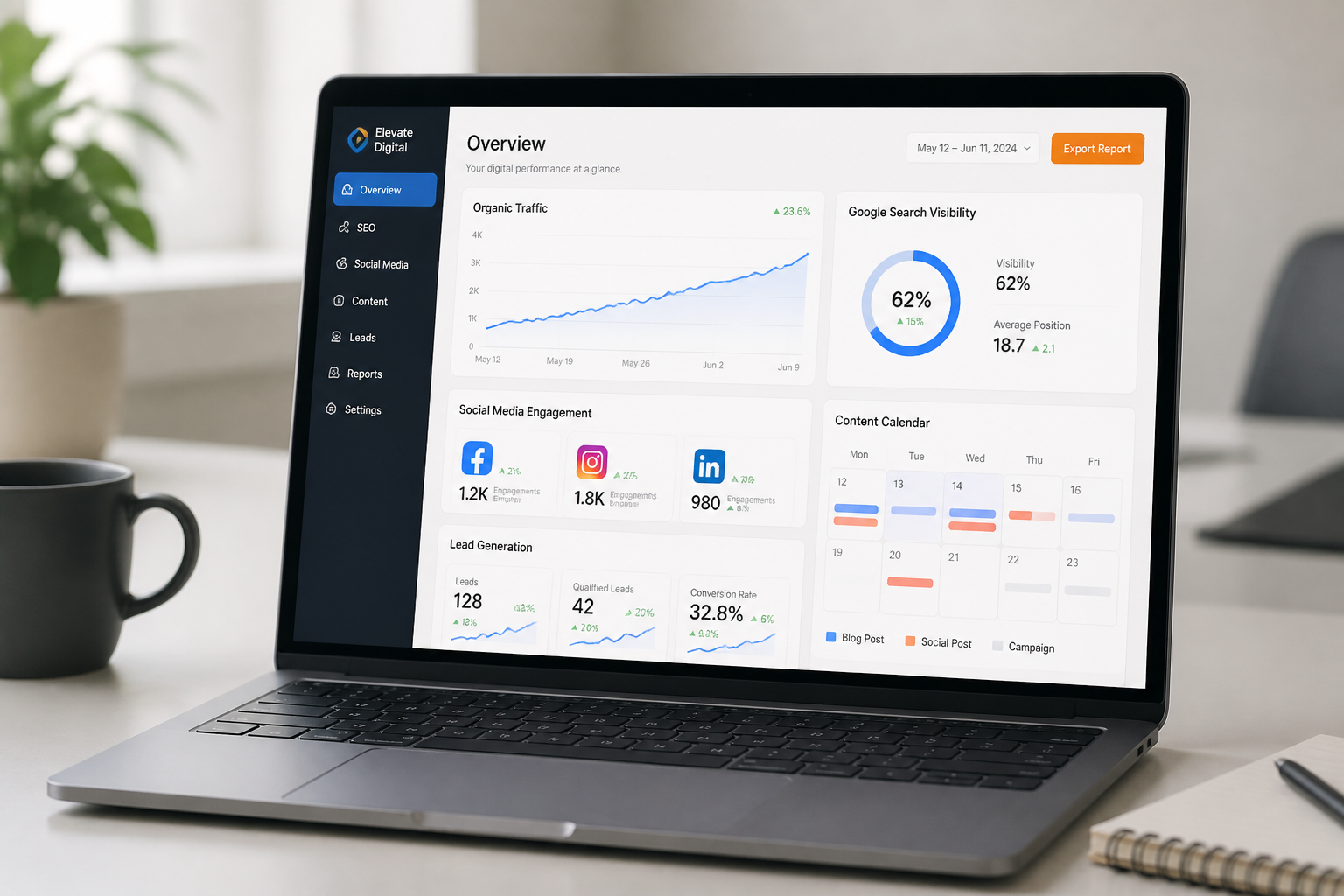
Reporting may include reach, impressions, engagement, follower growth, profile visits, link clicks, saves, shares, comments, leads, enquiries, website traffic and best-performing posts. The goal is to understand what content actually works.
8. Paid Social Support
Some social media strategies include paid ads — Facebook Ads, Instagram Ads, LinkedIn Ads, retargeting campaigns, lead generation campaigns, awareness campaigns, creative testing and audience testing. Paid social can amplify content and generate faster visibility.
How SEO And Social Media Work Together
SEO and social media work together through content, visibility, trust and audience behaviour. They may not always influence each other directly, but they support each other strongly.
Example: you publish a blog titled "Why Your Website Is Not Ranking On Google Even After SEO Work". SEO helps that blog rank on Google. Social media helps promote that blog to your audience. People who see the post may visit the blog, share it, save it, search your brand later, contact you or link to it from their own website. This creates a stronger content ecosystem.
SEO gives you search demand
SEO tells you what people are searching for. This helps you create social content based on real problems — "why are impressions increasing but clicks are low", "how long does SEO take", "SEO vs Google Ads" or "why is my website not ranking". You can turn these into LinkedIn posts, Instagram carousels, short videos and email topics.
Social media gives your content distribution
SEO content can take time to rank. Social media gives that content immediate visibility. You can promote blog posts, case studies, service pages, client reviews, industry pages, guides, checklists and offers. This helps more people discover your website content.
Both build trust
SEO builds trust through helpful website content. Social media builds trust through repeated visibility and personality. When someone sees your social content and then finds your website on Google, your brand feels more familiar. That familiarity can increase confidence.
How Social Media Supports SEO
Social media may not work like a direct ranking button, but it can support SEO in several important ways.
1. Content promotion
Publishing a blog is only the first step. You also need people to see it. Social media helps distribute your content — one blog can become a LinkedIn post, an Instagram carousel, a Facebook post, a short video, a Twitter/X thread, a newsletter section, a YouTube Short or a Pinterest pin.
2. More website traffic
Social media can drive visitors to your website via blog links, profile links, story links, LinkedIn posts, Facebook posts, Instagram bio, paid social campaigns and direct messages. If the traffic is relevant, it can support brand awareness and lead generation.
3. More brand searches
When people see your brand repeatedly on social media, they may later search for your brand on Google — "4Core Digital", "4Core Digital SEO", "Hunny Kumar SEO" or "4Core Digital case studies". Branded searches are a strong trust signal for your overall digital presence.
4. More backlink opportunities
People cannot link to content they never see. If your blog, case study or guide gets shared on social media, more people may discover it. Some may reference it in their own content. This can create backlink opportunities over time.
5. Better content testing
Social media can help you test which topics your audience cares about. If a post about "impressions but no clicks" performs well, that may be a good topic for a blog. If a post about "SEO mistakes" gets questions, that may become a guide. Social media feedback can guide SEO content planning.
6. Stronger trust before conversion
Many users check social profiles before contacting a business. If your social media looks active, professional and helpful, it can support conversion. A dead or outdated social presence may create doubt.
How SEO Supports Social Media Marketing
SEO does not only help Google rankings. It can also make your social media content better.
1. SEO provides content ideas
Keyword research shows what people actually search — how long does SEO take, why is my website not ranking, what is local SEO, SEO vs Google Ads, what is technical SEO, how to improve Google Business Profile, why are clicks low in Search Console. Each keyword can become a social post.
2. Blogs can become social posts
One SEO blog can be repurposed into multiple social assets. A blog titled "Why Your Website Is Not Ranking On Google Even After SEO Work" can become a carousel ("10 Reasons Your Website Is Not Ranking"), a LinkedIn post ("SEO work does not always mean SEO progress"), a Reel ("3 signs your SEO is not working"), an infographic, a short video, a newsletter topic and a client education post. This saves time and creates consistency.
3. SEO helps social captions
SEO research helps you write captions that match real customer language. Instead of writing vague captions, you can write about real problems people search. That makes your content more relevant.
4. Website content supports social conversions
If someone clicks from social media, your website must be ready. SEO helps improve landing pages, service pages, blog pages, case studies, contact pages, page speed, internal links and CTAs — so social traffic has somewhere useful to go.
5. SEO helps build topical authority
If your website has strong pages around SEO, local SEO, technical SEO, social media marketing and content marketing, your social media can reinforce the same topics. People see you talking about the same expertise across platforms and search — that builds authority.
SEO Vs Social Media: Which One Should You Invest In First?
This depends on your business stage, goals, budget and timeline.
Invest in SEO first if
- People already search for your services
- You need long-term lead generation
- Your website is underperforming
- You want to reduce dependence on ads
- You have service pages that need ranking
- You want organic traffic over time
- You serve local areas
- You have high-intent keywords
- Your competitors rank above you
Invest in social media first if
- Your audience spends time on social platforms
- You need brand awareness quickly
- Your business depends on trust and personality
- You have visual products or services
- You want to build a community
- You need to educate the market
- You want to promote offers regularly
- You have strong founder stories or client stories
- You want faster engagement
Invest in both if
You want long-term growth, both visibility and trust, support for the full customer journey, helpful content, leads from multiple channels, a stronger brand and more consistent marketing. For most businesses, the best answer is not SEO or social media — it is SEO plus social media, working from the same strategy.
Best Platforms For Social Media Marketing
Not every business needs to be active on every platform. The best platform depends on your audience and offer.
Best for B2B companies, SaaS businesses, consultants, agencies, professional services, coaches, recruiters, education providers and high-ticket services. LinkedIn works well for expertise, authority, founder-led content and business conversations.
Best for lifestyle brands, fashion, beauty, fitness, restaurants, travel, real estate, personal brands, local businesses and visual services. Instagram works well for visual storytelling, reels, carousels and trust-building.
Best for local businesses, home services, community-based businesses, service providers, older demographics, groups and local visibility, and retargeting ads. Facebook is still useful for local visibility and paid campaigns.
TikTok
Best for consumer brands, personal brands, education, fitness, beauty, food, entertainment, product demos and short educational content. TikTok can create fast reach when content is simple, human and engaging.
YouTube
Best for educational content, tutorials, product demos, long-form expertise, reviews, case studies, service explanations and search-based video content. YouTube works well because it combines search and video.
Best for home décor, fashion, beauty, weddings, travel, food, lifestyle, eCommerce and visual inspiration. Pinterest can drive long-term traffic for visual niches.
X
Best for tech, startups, founders, news, thought leadership, fast conversations and personal branding.
Choosing the right platform
Ask where your audience spends time, what content format you can create consistently, whether you are B2B or B2C, whether your offer is visual or educational, whether you need leads, awareness or community, and whether you can support the platform long term. It is better to be consistent on two platforms than inactive on six.
Content Strategy For SEO And Social Media
A strong strategy connects SEO topics with social media content. This avoids random posting and random blogging.
Step 1: Build content pillars
Content pillars are your main themes. For a digital marketing agency, pillars may include SEO education, Google Search Console tips, local SEO, technical SEO, social media marketing, Google Ads, case studies, client reviews, website conversion, AI SEO and business growth.
Step 2: Turn keywords into content
Example keyword: "SEO and social media marketing services". This can become a blog article, service page section, LinkedIn post, Instagram carousel, FAQ video, email newsletter, case study CTA and short explainer reel.
Step 3: Repurpose long content
One blog can become 10 LinkedIn posts, 5 Instagram carousels, 3 short videos, 1 checklist, 1 email newsletter, 1 infographic, 1 lead magnet and 1 webinar outline. This gives more value from each content idea.
Step 4: Connect social posts to website pages
Every social post does not need a link, but your content strategy should naturally guide people to useful pages. A post about SEO mistakes can link to your SEO audit page, technical SEO blog or contact page. A post about client results can link to case studies, client reviews or SEO service pages. A post about local SEO can link to the local SEO service page, Google Business Profile blog or home services SEO page.
Step 5: Use clear CTAs
Social media and SEO content should both guide users to the next step — read the full guide, get a free SEO audit, book a strategy call, view case studies, send us your website, request a growth plan, download the checklist. Content without a next step often loses business value.
How To Turn Social Media Traffic Into Leads
Getting social media traffic is not enough. The website must convert that traffic. Many businesses send social visitors to weak pages and then wonder why there are no leads.
What social visitors need
Social visitors may be less ready to buy than Google search visitors — they may need more trust. Your landing pages should include:
- Clear headline and strong service explanation
- Reviews and case studies
- Simple CTAs and clear contact options
- Fast loading speed and mobile-friendly design
- Trust signals, FAQs and proof of expertise
Use dedicated landing pages
Instead of sending every visitor to the homepage, send them to relevant pages — SEO post → SEO services page, local SEO post → local SEO page, Google Ads post → Google Ads page, case study post → case study page, review post → client reviews page, free audit offer → contact page. The more relevant the page, the better the conversion chance.
Use retargeting
Not everyone will contact you on the first visit. Retargeting can help bring interested users back — website visitors, blog readers, case study viewers, form abandoners, video viewers and social engagers. This helps social media and SEO work together with paid ads.
Track conversions
Track form submissions, calls, WhatsApp clicks, bookings, audit requests, consultation requests, newsletter signups, downloads and thank-you page visits. Without tracking, you may not know which content is generating leads.
How To Measure SEO And Social Media Performance
SEO and social media should be measured differently, but both should connect to business goals.
SEO metrics to track
- Organic clicks, impressions, CTR and average position
- Keyword rankings and indexed pages
- Organic traffic and top landing pages
- Backlinks and referring domains
- Core Web Vitals
- Form submissions, calls and organic leads
- Organic revenue where tracking allows
Social media metrics to track
- Reach, impressions and engagement rate
- Comments, shares and saves
- Follower growth and profile visits
- Link clicks, video views and watch time
- Direct messages and leads
- Website visits from social
- Cost per lead if ads are running
Combined metrics to track
- Website traffic from social
- Organic search and branded search growth
- Assisted conversions and returning visitors
- Lead quality and top converting content
- Best-performing blogs and posts
- Enquiry source
- Revenue where tracking allows
Do not measure vanity metrics only
Followers and rankings are useful, but they are not the final goal. Better questions are: are we getting more qualified traffic, are people contacting us, are leads improving, are rankings moving for the right keywords, are social posts driving useful engagement, are people searching our brand more, are website visitors converting? Marketing should be measured by visibility, trust and business outcomes.
Common Mistakes Businesses Make
Many businesses struggle with SEO and social media because the strategy is disconnected.
- Treating SEO and social media as separate teams and separate goals
- Posting random content just to stay active
- Publishing blogs without promoting them on social
- Chasing followers instead of leads
- Targeting keywords without buyer intent
- Ignoring website conversion and weak CTAs
- Not tracking calls, forms and enquiries
- Using identical content everywhere instead of adapting per platform
- Giving up before the strategy has time to compound
- No clear offer or next step in content
90-Day SEO And Social Media Marketing Plan
If you want SEO and social media to work together, use a structured plan.
Days 1–30: Strategy, audit & foundations
SEO tasks:
- Review Google Search Console and audit website pages
- Check technical SEO and review existing rankings
- Identify keyword opportunities and review competitors
- Check internal linking and top service pages
- Check GA4 conversion tracking
- Social: review profiles, audit past posts, define audience, choose platforms, create pillars, build a 30-day calendar, update bios
Days 31–60: Content creation & optimization
SEO tasks:
- Optimize priority service pages and meta tags
- Create one or two high-quality blogs
- Add FAQs and improve internal linking
- Add schema where relevant and update weak content
- Submit priority URLs in Search Console
- Social: publish educational posts, share blog summaries, carousels from SEO topics, client reviews, founder insights, promote service pages, test short videos, engage with comments
Days 61–90: Distribution, authority & lead tracking
SEO tasks:
- Build relevant backlinks and add case studies
- Improve pages with impressions but low clicks
- Review keyword movement and strengthen internal links
- Monitor indexed pages and organic conversions
- Social: repurpose best posts, promote case studies, create lead-generation posts, test paid promotion if suitable, build retargeting audiences, track link clicks and enquiries
SEO And Social Media Checklist
Use this checklist to review whether your SEO and social media are working together.
SEO checklist
- Website has clear service pages
- Technical SEO issues are fixed
- Important pages are indexed
- Keyword research is completed
- Blog strategy targets real search intent
- Title tags and meta descriptions are optimized for clicks
- Internal links connect related pages
- Case studies and reviews are visible
- Google Search Console and GA4 tracking are working
- Leads and calls are tracked
Social media checklist
- Priority platforms are selected and profiles are fully optimized
- Branding is consistent
- Content pillars are defined
- Posting calendar is prepared
- Captions are written for engagement
- Blog content is repurposed
- Reviews and results are shared
- CTAs are clear
- Comments and messages are monitored
- Link clicks and best-performing posts are reviewed
Combined strategy checklist
- SEO topics are used for social content
- Social posts promote blog content
- Social traffic goes to relevant landing pages
- Website pages support social visitors
- Case studies are used across both channels
- Reviews support both SEO and social proof
- Brand messaging is consistent
- Reporting includes SEO and social metrics
- Leads are tracked by source
- Strategy is reviewed monthly
Final Thoughts
SEO and social media marketing services are stronger together than they are alone.
SEO helps your business get found when people are searching. Social media helps your business stay visible, build trust and create demand before people search. SEO gives you long-term organic visibility. Social media gives you ongoing audience engagement. SEO brings intent. Social media builds familiarity.
If your business wants sustainable digital growth, do not treat SEO and social media as disconnected tasks. Your blogs should become social posts. Your social questions should become blog topics. Your reviews should support both website trust and social proof. Your case studies should be promoted across search and social. Your website should convert the traffic both channels generate.
The real goal is not simply more rankings or more followers. The real goal is more visibility, more trust, more qualified leads and more revenue.