What Is Citation Analysis In AI SEO?
AI search is changing how people discover brands, services, products and expert information. In traditional SEO, businesses mostly tracked keyword rankings, organic traffic, backlinks, impressions, clicks and conversions. In AI SEO, another layer has become important: is your brand being mentioned and cited inside AI-generated answers?
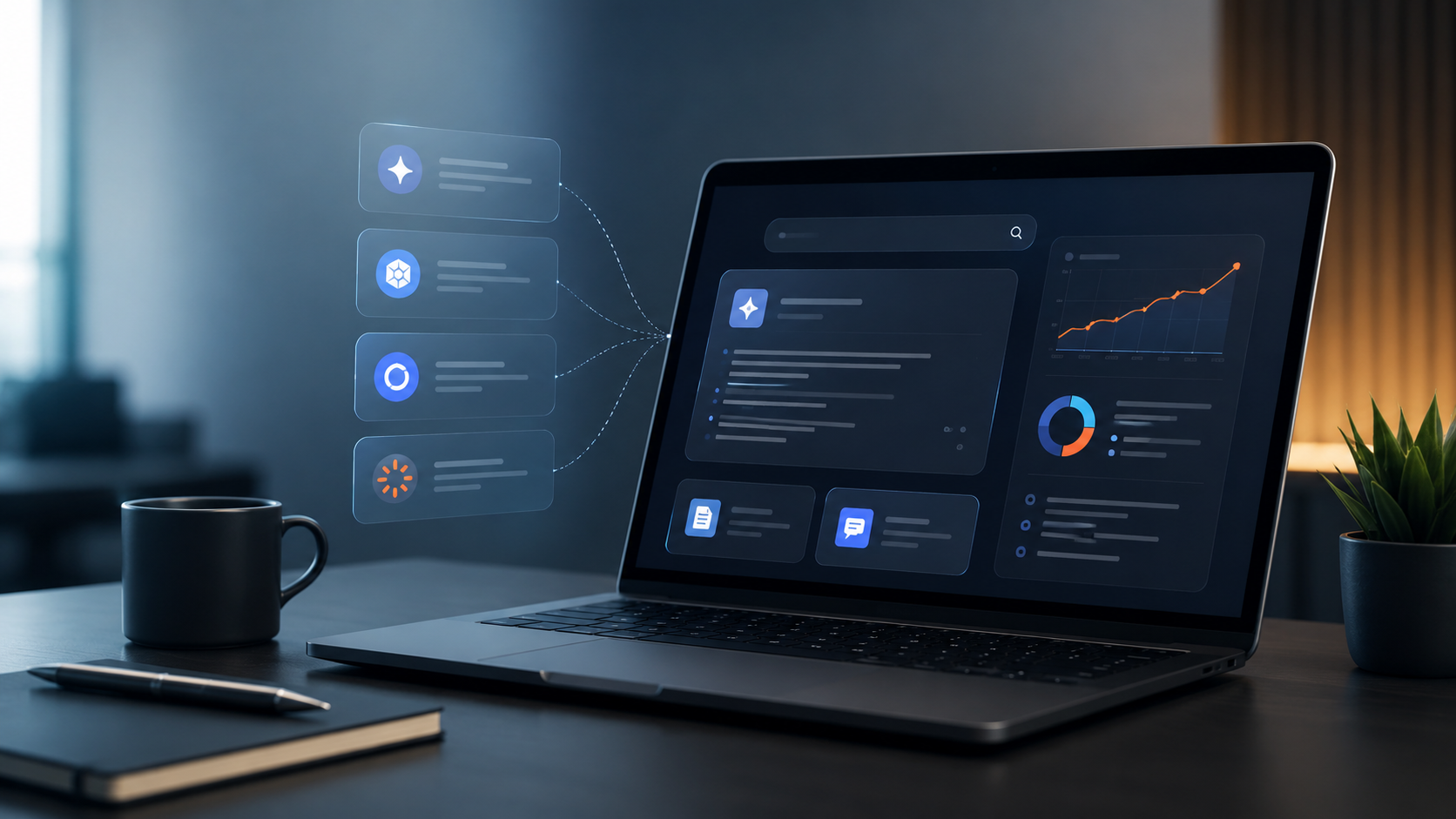
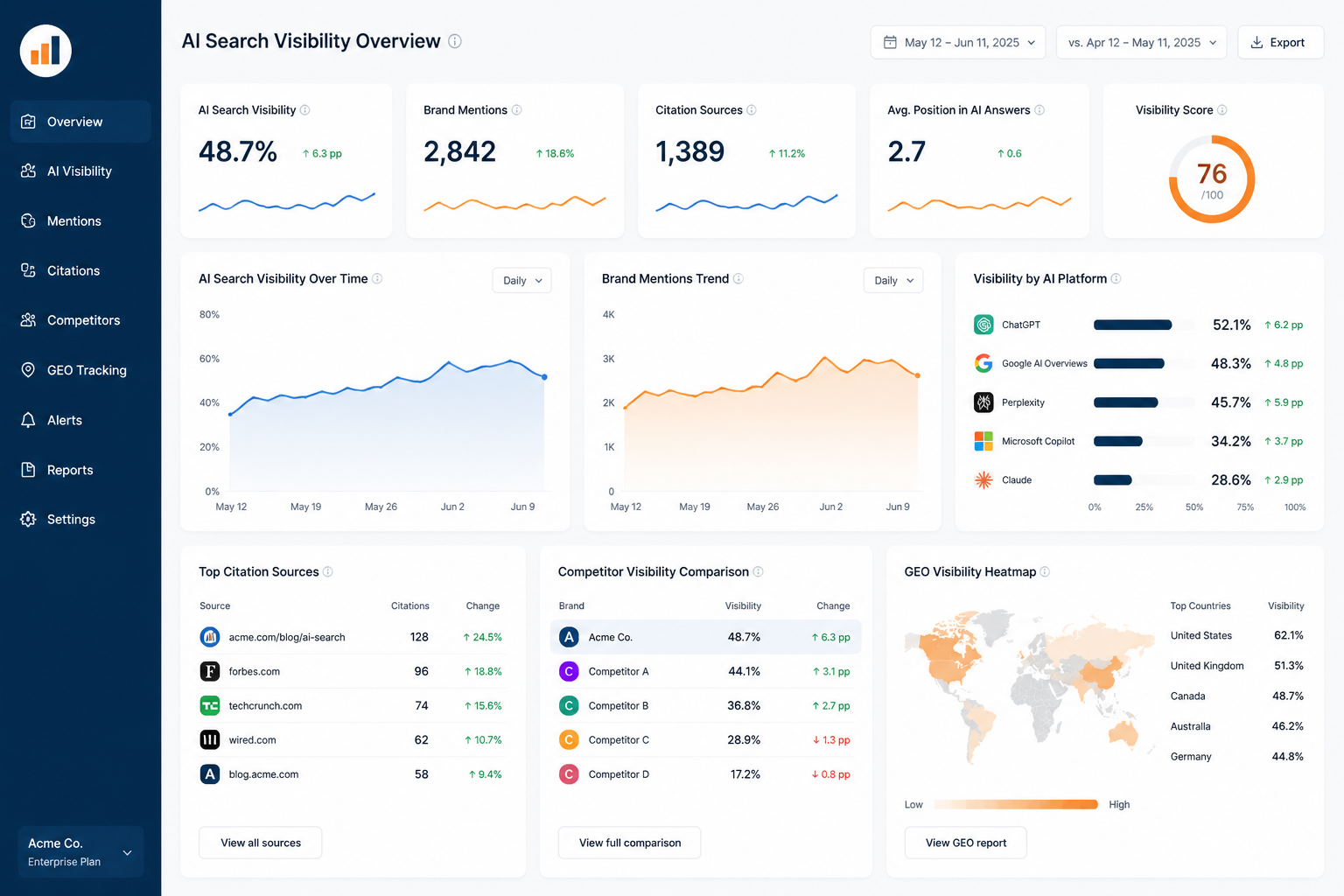
Citation analysis in AI SEO is the process of tracking which sources AI search engines and answer engines use when generating responses. It helps you understand whether your brand appears in AI answers, whether your website is cited, which competitors are recommended instead of you, and which third-party pages influence how AI systems describe your business.
When someone asks ChatGPT, Perplexity, Gemini, Google AI Overviews or Copilot for recommendations or advice, your website may not receive a normal blue-link ranking. Instead the AI system may mention your brand, cite your website, reference a third-party page about your brand, recommend competitors — or ignore your brand completely.
Questions citation analysis helps answer
- Is my brand mentioned in AI answers?
- Is my website being cited as a source?
- Which competitors are being recommended instead of us?
- Which websites are AI tools using to answer questions in my industry?
- Are AI tools citing my own content or third-party pages about my brand?
- Which prompts trigger our brand — and which trigger competitors?
- Which content needs improvement to become more citation-worthy?
- Are AI tools describing our brand accurately?
- Are we visible in ChatGPT, Perplexity, Gemini, Google AI Overviews and Copilot?
Why Citation Analysis Matters For AI Search Visibility
AI search is changing the way users move from question to decision. In a normal Google search, the user sees a list of results and decides which website to click. In AI search, the user may receive a summarized answer with recommendations and citations already included — which means the user may form an opinion before visiting any website.
Traditional SEO measurement usually includes rankings, clicks, impressions, CTR, traffic, backlinks and conversions. AI SEO adds new metrics: AI mentions, AI citations, prompt visibility, competitor share of voice, cited source domains, cited URLs, answer sentiment, brand accuracy, platform-by-platform visibility and content citation potential.
These new metrics help you understand how AI systems actually see your brand — not just how Google ranks your pages.
Citation Vs Mention Vs Ranking Vs Backlink
Before choosing a citation analysis service, it is important to understand the difference between similar terms.
What is an AI citation?
An AI citation is when an AI answer includes a source link or reference that supports the answer. The citation may point to your website, a blog post, a case study, a product or service page, a third-party article, a directory, a review site, a forum, a news article, a YouTube page or a documentation page. A citation means the AI system used or displayed a source as part of the answer.
What is an AI mention?
An AI mention is when your brand appears in the answer, even without a clickable citation. Mentions matter because AI tools often recommend brands without always citing them directly.
What is a ranking?
In AI SEO, ranking may mean your brand appears first in a list, appears above competitors, your website is cited before other sources, your product is recommended higher in the answer, or your page appears in Google AI Overview sources.
What is a backlink?
A backlink is a link from another website to your website. Backlinks are still important for traditional SEO and authority building — but an AI citation is not always the same as a backlink. An AI answer may cite a third-party page about your brand without linking to your website, so AI citation analysis needs to look beyond backlinks.
What Makes A Good AI Citation Analysis Service?
Not every AI visibility tool is equal. Before choosing a service, look for the features that actually matter for your workflow.
1. Platform coverage
A good service should track visibility across relevant AI platforms.
- ChatGPT
- Perplexity
- Gemini
- Google AI Overviews
- Google AI Mode
- Copilot
- Claude
- DeepSeek
- Grok and other emerging answer engines
2. Prompt-level tracking
AI visibility depends heavily on prompts. A good tool should let you track prompts your buyers actually use.
- best [service] for [industry]
- top [product category] for [use case]
- how to choose a [service provider]
- [brand] vs [competitor]
- best [software] for [business type]
- [service] near me
- [industry] agency recommendations
3. Brand mentions
- Direct mentions
- Competitor mentions
- Brand comparison prompts
- Recommendation prompts
- Informational prompts
- Category-level prompts
4. Citation tracking
The tool should show which URLs are cited — yours, competitors and third parties, plus which content types are winning citations.
5. Competitor benchmarking
You should be able to see which competitors appear more often, which prompts they win, which sources cite them, which content earns visibility and where your brand is missing.
6. Source URL analysis
Knowing you were cited is not enough — you need cited URL, cited domain, content type, citation frequency, platform, and the prompt that triggered it.
7. Sentiment & answer framing
A tool should help you check whether the brand is described accurately, whether services are explained correctly, whether outdated details appear, whether pricing is wrong, and whether competitors are positioned better.
8. Historical trends
AI results change — you need to track mention growth, citation growth, platform-level visibility, prompt-level movement, competitor share of voice, cited source changes and sentiment changes.
9. Actionable recommendations
A good service should not only show data but also help you decide what to do next: create new content, improve cited pages, add comparison sections and FAQs, strengthen schema, earn third-party mentions and improve brand entity consistency.
10. Reporting & export options
Agencies and marketing teams need dashboards, exports, client-ready reports, competitor comparisons, prompt-level reports, citation source reports and white-label reporting where needed.
Best Citation Analysis Services For AI SEO
There are many tools emerging in the AI SEO and GEO space. The main services worth considering include Profound, Semrush AI Visibility Toolkit, Ahrefs Brand Radar, Peec AI, OtterlyAI and SE Ranking AI Visibility Tracker. Each has a different strength.
| Tool | Best For | Main Strength | Best Fit |
|---|---|---|---|
| Profound | Enterprise AI visibility | Deep answer-engine and citation intelligence | Larger brands, enterprise teams, serious AI visibility programs |
| Semrush AI Visibility Toolkit | SEO teams | AI visibility inside a broader SEO platform | SMBs, agencies, in-house SEO teams |
| Ahrefs Brand Radar | SEO and backlink-led teams | Brand visibility, citations and SEO data together | SEO teams, content teams, backlink-focused teams |
| Peec AI | AI search analytics | Competitive AI visibility tracking | AI-focused marketing teams and brands |
| OtterlyAI | Practical monitoring | Multi-platform AI search monitoring | Agencies, small teams, growing brands |
| SE Ranking AI Visibility Tracker | SEO reporting + AI tracking | AI mentions and links inside SEO workflow | SEO teams already using rank tracking/reporting |
Profound: Best For Enterprise AI Citation Intelligence
Profound is one of the strongest options for brands that want dedicated AI search visibility and citation intelligence. It is built around understanding how AI answer engines talk about your brand, where your brand appears and which sources influence AI answers.
Why Profound is strong
- How often your brand appears in AI answers
- What AI systems say about your brand
- Which websites influence AI answers
- Which citations support AI-generated responses
- How competitors are being discussed
- What sources drive visibility
- How AI visibility changes over time
Best for
- Enterprise brands
- Funded startups
- B2B companies
- Large eCommerce brands
- Agencies managing serious AI visibility campaigns
- Brands in competitive categories
- Teams that need stakeholder-ready AI visibility reporting
Potential limitation
Profound may be more than a small business needs if the goal is only basic visibility checking. If you also need traditional SEO features like keyword research, backlink audits, technical site audits and rank tracking, you may still need another SEO platform alongside it.
Best use case
Choose Profound if your main question is: 'How do AI answer engines talk about our brand, our competitors and our category — and which sources are shaping those answers?'
Semrush AI Visibility Toolkit: Best For SEO Teams
Semrush is already widely used for SEO, PPC, content, competitor research, keyword analysis, site audits and reporting. Its AI visibility features are useful for teams that want AI search insights without separating them completely from their existing SEO workflow.
AI SEO should not be treated as a separate island — AI visibility often depends on the same foundations as SEO: content quality, authority, technical health, brand consistency, search intent, entity clarity and third-party mentions.
Best for
- SEO agencies
- SMBs
- Marketing teams
- Content teams
- Businesses already using Semrush
- Teams that want SEO and AI visibility in one place
- Agencies that need client reporting
Best use case
Choose Semrush if your main question is: 'How can we add AI visibility tracking to our existing SEO workflow and turn it into practical SEO actions?'
Ahrefs Brand Radar: Best For SEO, Backlink & Brand Visibility Teams
Ahrefs is known for SEO data, backlinks, keyword research, competitive analysis and content research. Brand Radar adds AI visibility and brand discovery into that ecosystem.
Why Ahrefs Brand Radar is strong
- Where your brand appears in AI answers
- How often competitors appear
- Which sources cite brands
- What brand conversations exist across AI search
- Where citation opportunities may exist
- How AI visibility connects with broader SEO data
Best for
- SEO teams
- Content marketers
- Backlink-focused teams
- Digital PR teams
- Agencies and brands that already use Ahrefs
- Teams that want AI visibility plus SEO intelligence
Best use case
Choose Ahrefs Brand Radar if your main question is: 'Which brands and sources are visible in AI answers, and how can we use SEO, backlinks and content authority to improve our position?'
Peec AI: Best For AI Search Analytics & Competitive Monitoring
Peec AI is built specifically around AI search analytics and visibility tracking. It is useful for teams that want to monitor how brands perform across AI platforms and compare visibility against competitors.
Why Peec AI is strong
- AI search visibility tracking
- Competitor monitoring
- Platform-level visibility
- Brand performance across AI systems
- Prompt-based analysis
- AI citation insights
- Visibility growth measurement
Best for
- AI SEO teams
- GEO-focused marketers
- B2B brands and SaaS companies
- Agencies tracking AI search visibility
- Marketing teams that want dedicated AI analytics
Best use case
Choose Peec AI if your main question is: 'How visible is our brand across AI search platforms compared with competitors, and where are we losing citation opportunities?'
OtterlyAI: Best For Practical AI Search Monitoring
OtterlyAI is a practical AI search monitoring option for tracking brand visibility, mentions and website citations across multiple AI search platforms. It can be a good option for teams that want to start monitoring AI visibility without building a complex enterprise stack.
Why OtterlyAI is useful
- Brand mentions
- Website citations
- AI search visibility
- Sentiment
- Competitor visibility
- Prompt-level monitoring
- GEO opportunities
- Content recommendations
Best for
- Small teams
- Growing brands
- Agencies and consultants
- Businesses starting AI SEO monitoring
- Teams that want practical dashboards
- Brands that need multi-platform visibility checks
Best use case
Choose OtterlyAI if your main question is: 'Can we monitor AI search mentions and citations regularly without overcomplicating the process?'
SE Ranking AI Visibility Tracker: Best For SEO Teams That Want AI Tracking With Rank Tracking
SE Ranking is traditionally known as an SEO platform for rank tracking, audits, keyword research, reporting and competitor analysis. Its AI visibility tracking is useful for teams that want AI search data inside a familiar SEO workflow.
Why SE Ranking is useful
- Brand mentions in AI answers
- Links in AI answers
- Target prompt performance
- Competitor visibility
- AI visibility trends
- SEO and AI performance together
Best for
- SEO agencies and freelancers
- SMBs
- Teams already using SE Ranking
- Businesses that want rank tracking and AI visibility together
- Teams that need practical reporting
Best use case
Choose SE Ranking if your main question is: 'How can we track AI visibility alongside traditional SEO rankings, audits and reporting?'
Which Tool Should You Choose?
The best tool depends on what you actually need to answer. Here is the most practical way to choose.
Best overall for dedicated AI citation analysis
Profound — for enterprise brands, competitive industries, AI SEO programs, stakeholder reporting, deep citation analysis and competitor intelligence.
Best for existing SEO teams
Semrush AI Visibility Toolkit — for SEO agencies, SMBs, in-house marketing teams, content teams and teams already using Semrush that want practical SEO recommendations.
Best for backlink & authority-focused SEO teams
Ahrefs Brand Radar — for SEO teams, digital PR teams, backlink-focused teams, content marketers and agencies already using Ahrefs.
Best for AI search analytics
Peec AI — for GEO teams, AI SEO teams, SaaS and B2B brands running dedicated AI search monitoring projects.
Best for simple AI search monitoring
OtterlyAI — for small teams, agencies, consultants, growing brands and businesses testing AI visibility tracking.
Best for SEO reporting + AI visibility
SE Ranking AI Visibility Tracker — for SEO agencies, freelancers, SMBs and ranking-focused teams that want practical monthly reporting.
What To Track Inside A Citation Analysis Tool
Buying a tool is only the first step — you need to know what to track. Focus on brand mentions, website citations, third-party citations, competitor mentions, prompt visibility, citation source quality, answer sentiment and citation trends over time.
Brand mentions
Track whether your brand appears in AI answers. Segment by platform, prompt, topic, product/service, region, competitor set and answer type.
Website citations
- Homepage citations
- Blog citations
- Service page citations
- Product page citations
- Case study citations
- Author profile citations
- Resource page citations
Third-party citations
AI tools may cite third-party pages instead of your own website.
- Directories
- Review platforms
- Reddit, Quora and forums
- YouTube and LinkedIn
- Wikipedia and news websites
- Industry publications
- Comparison and marketplace websites
- Partner websites
Competitor mentions
Track who appears most often, who appears above you, which prompts they win, which sources support their visibility, whether they are cited directly and whether third-party content mentions them more often.
Prompt visibility
- best [service] for [industry]
- top [software] for [use case]
- [brand] alternatives
- [competitor] vs [brand]
- how to choose a [service provider]
- best [agency/service] in [location]
- what is the best [tool] for [problem]
Citation source quality
Review domain authority, topical relevance, content depth, freshness, accuracy, brand sentiment, page structure, whether the source includes your brand and whether it links to your website.
Answer sentiment
- Positive framing
- Neutral framing
- Outdated information
- Missing services
- Incorrect descriptions
- Competitor preference
- Weak differentiation
- Reputation issues
Citation trends
Ask whether citations and mentions are increasing, whether competitors are gaining visibility, whether certain platforms are improving, whether prompts are declining, and whether updated pages are getting cited.
How To Improve Your AI Citations
Citation analysis is useful only when it leads to action. Use these ten moves to convert visibility data into AI-ready content and authority.
1. Create content that answers specific prompts
AI tools respond to prompts — your content should answer real questions clearly. See our practical guide at /blog/how-to-optimize-content-for-chatgpt-google-ai-overviews-2026 for prompt-first content patterns.
2. Use clear structure
- Clear headings
- Short paragraphs
- Comparison tables
- Bullet points
- FAQs and definitions
- Step-by-step guidance
- Pros and cons
- Examples and summary sections
- Schema markup where appropriate
3. Build entity consistency
Keep brand information consistent across your website, Google Business Profile, LinkedIn, Facebook, YouTube, directories, review platforms, guest posts, author bios, press mentions and agency listings.
4. Earn third-party mentions
AI tools often cite third-party sources. Aim for visibility on industry blogs, comparison sites, review platforms, podcasts, interviews, news sites, guest posts and niche publications.
5. Improve author & expertise signals
Strengthen author bios, team pages, case studies, client reviews, credentials, portfolio pages, About page, LinkedIn profiles and topical authority signals.
6. Update old content
Refresh old blogs and pages with current examples, better explanations, new FAQs, improved internal links, clearer headings, updated screenshots, stronger sources and schema markup. Our guide on why /blog/website-not-ranking-after-seo-work covers common causes to fix first.
7. Strengthen technical SEO
Review indexing, robots.txt, sitemaps, page speed, mobile usability, structured data, broken links, canonical tags, duplicate content, JavaScript rendering and internal linking — see /blog/technical-seo-audit-guide for a full checklist.
8. Create comparison & definition content
- [tool] vs [tool] posts
- best [service] for [industry]
- what is [topic]?
- how to choose [service]
- [brand] alternatives
- top [category] tools
- beginner guides and checklists
9. Add original insights
Include original examples, case studies, screenshots, frameworks, checklists, decision trees, expert opinions, before-and-after analysis and practical recommendations.
10. Build internal links to citation-worthy pages
Add internal links from the homepage, service pages, blog posts, case studies, industry pages, footer, related content blocks and topic clusters.
90-Day AI SEO Citation Analysis Plan
Days 1–30: Set up tracking & baseline
- Choose one citation analysis service
- Create a list of priority AI platforms
- Create a list of buyer-intent prompts
- Add competitor brands
- Track brand mentions, website citations and competitor citations
- Identify top cited domains
- Review whether your own website appears
- Review brand accuracy in AI answers
- Export baseline visibility data
Days 31–60: Improve content & entity signals
- Improve pages that should be cited
- Add FAQs to key pages
- Create comparison content
- Update old blogs
- Improve author bios
- Strengthen About and service pages
- Add internal links to priority content
- Improve schema markup
- Fix technical SEO issues
- Update brand profiles and directories
- Build consistent entity information across platforms
Days 61–90: Build authority & track movement
- Earn third-party mentions
- Build relevant backlinks
- Publish expert content
- Promote content on social media
- Add case studies
- Improve review visibility
- Pitch useful content to niche websites
- Monitor citation changes
- Compare competitor movement
- Track which prompts improve
- Prepare the next 90-day roadmap
AI Citation Analysis Checklist
Tool selection checklist
- Tracks relevant AI platforms
- Supports custom prompts
- Tracks brand mentions and website citations
- Shows cited URLs and competitors
- Shows visibility trends
- Supports sentiment or answer framing
- Offers exports or reports
- Supports regions and languages you need
- Provides actionable recommendations
- Fits your budget and SEO workflow
Prompt tracking checklist
- Brand prompts
- Competitor prompts
- Category prompts
- Comparison prompts
- 'Best' prompts
- 'Near me' prompts
- Problem-solution prompts
- Product/service prompts
- Industry prompts
- Buying-intent prompts
Citation review checklist
- Is your website cited?
- Which pages are cited?
- Are competitors cited more often?
- Which third-party sources are cited?
- Are citations accurate and current?
- Are cited pages well structured?
- Are important pages missing?
- Are AI tools using outdated sources?
- Are there new citation opportunities?
Optimization checklist
- Improve content structure
- Add FAQs and comparison sections
- Improve page titles
- Strengthen entity signals
- Add schema markup
- Build internal links
- Update old content
- Earn third-party mentions
- Improve reviews and trust signals
- Build relevant backlinks
- Track results monthly
Common Mistakes To Avoid
1. Only tracking your own website
AI tools may cite third-party sources about your brand. Track the full citation ecosystem, not only your domain.
2. Ignoring mentions without links
A brand mention without a link can still influence visibility. Do not track only clickable citations.
3. Tracking random prompts
Your prompts should reflect real buyer journeys — avoid prompts that do not connect to business goals.
4. Choosing a tool only because it is popular
A small business may not need an enterprise platform, and an enterprise brand may outgrow a basic monitor quickly.
5. Treating AI SEO separately from traditional SEO
AI visibility is connected to content quality, technical SEO, authority, brand consistency and third-party mentions. Do not separate them completely.
6. Ignoring competitor sources
If AI tools cite competitors, study why — their content, reviews, directories, media mentions, comparison pages, backlink sources and topical authority.
7. Expecting instant AI citations
AI citation visibility takes time. You need consistent content, authority, third-party trust and monitoring.
8. Forgetting about brand accuracy
Being mentioned is not enough — AI tools should describe your brand correctly. Track whether answers are accurate, current and useful.
9. Not connecting data to action
Citation reports should lead to new content, better content, stronger authority, better internal links, digital PR, source cleanup, schema improvements and brand profile updates.
10. Not reviewing tool data manually
AI answers vary. Use tool data as a guide, but manually review important prompts and outputs before making big decisions.
Final Thoughts
So, which citation analysis service is best for AI SEO? The best answer depends on your situation. If you want deep enterprise AI citation intelligence, Profound is a strong option. If you want AI visibility inside a broader SEO workflow, Semrush is practical. If you care about SEO authority, backlinks, brand discovery and AI visibility together, Ahrefs Brand Radar is useful. If you want dedicated AI search analytics and competitor monitoring, Peec AI is worth considering. If you want simpler AI search monitoring, OtterlyAI can be a good starting point. If you want AI visibility connected with rank tracking, audits and SEO reporting, SE Ranking may fit well.
But remember: the tool does not create AI visibility by itself. A citation analysis service only shows the opportunity — your results depend on what you do with that data. To improve AI SEO, you need strong content, clear answers, trusted sources, technical accessibility, consistent brand information, expert authorship, third-party mentions, relevant backlinks, useful comparisons, fresh pages, strong entity signals and ongoing tracking.
AI citation analysis is not a replacement for SEO — it is the next layer of SEO measurement. The businesses that win will not only ask 'Are we ranking on Google?' They will also ask 'Are we being cited, mentioned and trusted by AI search systems when our customers ask important questions?' If you would like help reviewing your AI visibility across ChatGPT, Perplexity, Gemini and Google AI Overviews, our team at /contact and case studies at /case-studies are a good next step, along with our /client-reviews to see how we work with clients.