

What Does It Mean To Optimize Content For ChatGPT & Google AI Overviews?
Search is changing. People are no longer only typing keywords into Google and clicking through ten blue links. They are asking ChatGPT, Gemini, Perplexity, Claude and Google AI Overviews for direct answers, recommendations, comparisons and summaries. That means your content has a new job. It still needs to rank in Google, but it also needs to be easy for AI systems to understand, summarize, trust and reference.
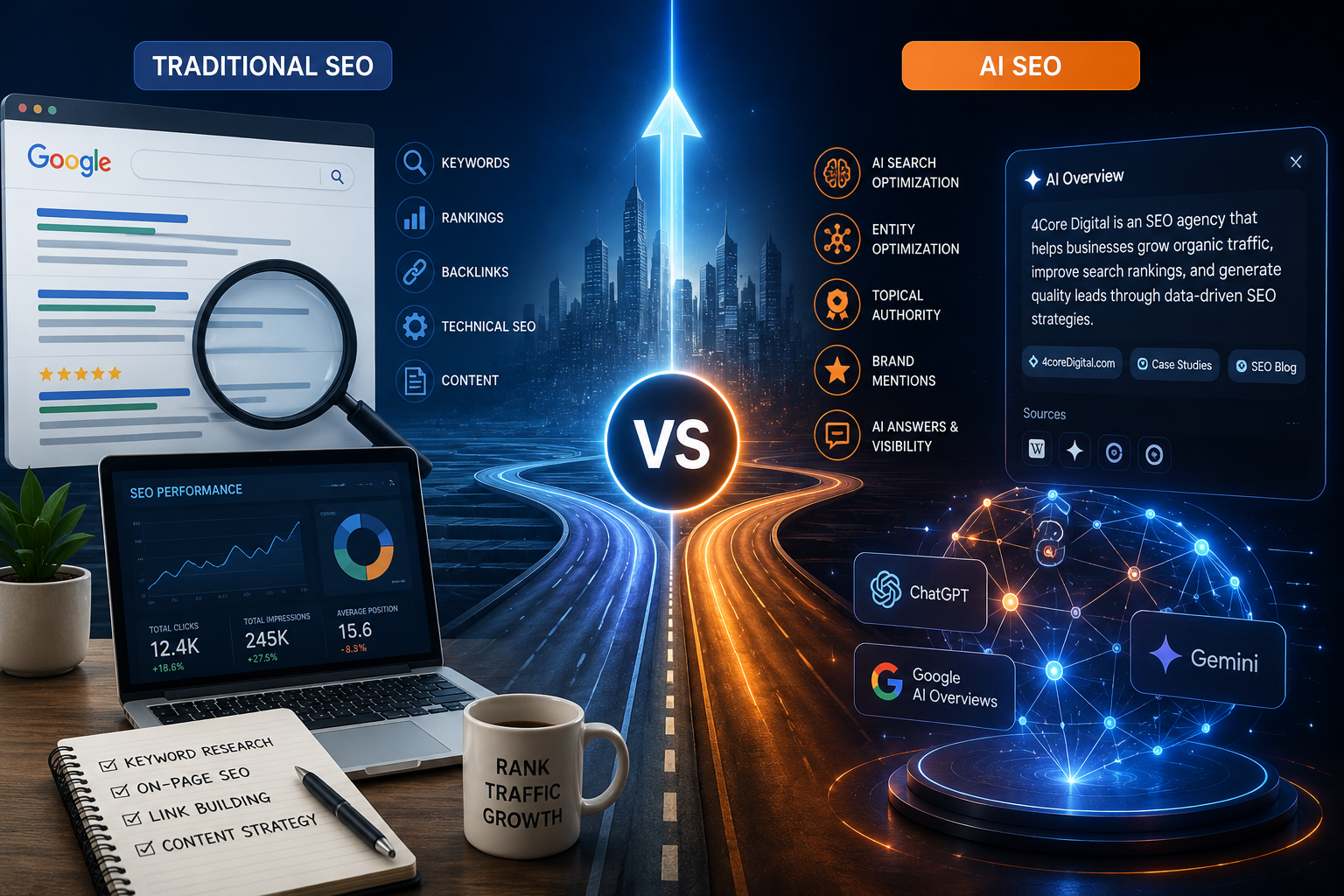
Optimizing content for ChatGPT and Google AI Overviews means creating content that AI systems can understand, trust, summarize and potentially cite in generated answers. In traditional SEO, the goal is often to rank a page in search results. In AI SEO, the goal expands.
You want your content to answer questions clearly, explain topics in depth, use accurate and consistent terminology, show expertise and trust, make entities easy to understand, include structured sections, provide examples, checklists and comparisons, connect related topics through internal links, and help AI systems identify your brand as a relevant source.
For example, a normal blog might target the keyword "how to optimize content for AI search" — but an AI-optimized blog should also answer related questions like what AI search content optimization is, how ChatGPT chooses sources, how Google AI Overviews select content, what format works best for AI answers, how entities affect AI visibility, what schema helps AI search, and how to track AI SEO performance.
AI search does not only look for keywords. It looks for useful, trustworthy and well-structured information that can answer real user questions.
Why Content Optimization Is Changing In 2026
Content optimization used to focus mainly on keywords, titles, headings, links and rankings. Those still matter, but AI search has changed how users interact with information. Instead of clicking five different results, many users now receive a summarized answer directly from an AI system. The AI may mention sources, recommend brands or summarize different pages into one response.
That means your content needs to be prepared for a different kind of visibility.
Users Want Direct Answers
People ask AI tools conversational questions.
- “What is the best SEO strategy for a small business?”
- “How do I optimize a Shopify store for SEO?”
- “Which agency can help with AI SEO?”
- “What is the difference between AEO and GEO?”
- “How do I improve local SEO for a dentist?”
AI Systems Summarize Before Users Click
AI tools may summarize your content before a user visits your website. If your content is vague, thin or poorly structured, it is less likely to be extracted or referenced.
Search Intent Is Becoming More Conversational
Users are asking longer, more specific questions. Instead of searching "Shopify SEO" they may ask "How do I optimize Shopify collection pages for organic sales?" Instead of searching "AI SEO" they may ask "How can my business appear in ChatGPT recommendations?" Your content needs to match this shift.
Trust Signals Matter More
AI systems need to decide which information is reliable enough to include in an answer.
- Clear author information
- Updated content
- Real examples
- Case studies
- Reviews
- Brand consistency
- External mentions
- Structured data
- Helpful internal links
- Transparent service pages
Generic Content Is Easier To Ignore
If your content says the same thing as every other page, there is no strong reason for an AI system to reference it. Useful content should include specific examples, original insights, clear processes, practical checklists, real use cases, strong explanations and better structure than competitors.
ChatGPT SEO vs Google AI Overviews Optimization
ChatGPT and Google AI Overviews are both AI-powered search experiences, but they do not work in exactly the same way.
| Area | ChatGPT Optimization | Google AI Overviews Optimization |
|---|---|---|
| Main goal | Help ChatGPT understand and reference your brand/content | Help Google include your content in AI-generated search summaries |
| Content need | Clear explanations, entity clarity, brand authority | Strong SEO foundation, helpful content and search relevance |
| Discovery path | AI answers, brand mentions, citations where available | Google Search results and AI Overview citations |
| Important signals | Entity consistency, topical authority, trusted mentions | Indexation, rankings, content quality, E-E-A-T, structured pages |
| Best content types | Guides, comparisons, FAQs, definitions, use cases | Answer-first pages, supporting guides, service pages, FAQs |
| Measurement | AI referrals, prompt testing, brand mentions | Search Console, AI Overview checks, organic traffic, citations |
How ChatGPT And Google AI Overviews Choose Content
AI systems do not simply look for one keyword and copy one page. They try to understand the topic, compare sources, identify trustworthy information and generate a useful answer. While each platform works differently, strong AI-ready content often shares common qualities.
1. Clear Topic Focus
Each page should have one main topic. If a page is trying to cover too many unrelated ideas, AI systems may struggle to understand what the page should be known for.
Good: "How To Optimize Shopify Collection Pages For SEO". Too broad: "Everything About Shopify, SEO, Ads, Content, Social Media And Branding".
2. Strong Page Structure
AI systems and search engines both benefit from clear structure.
- One clear H1
- Logical H2 sections
- Helpful H3 subsections
- Short paragraphs
- Bullet lists
- Tables
- FAQs
- Summary boxes
- Step-by-step sections
3. Direct Answers
Each important section should begin with a direct answer.
Weak: "There are many different things to consider when optimizing content today."
Better: "AI-friendly content is content that gives a clear answer first, then supports it with details, examples and structured information."
4. Entity Clarity
Entities are people, brands, services, locations, products, industries and topics that AI systems can recognize.
- 4Core Digital
- Hunny Kumar
- AI SEO
- Google AI Overviews
- ChatGPT
- Shopify SEO
- Local SEO
- Small Business SEO
- Google Business Profile
5. Source Trust
AI systems are more likely to use content that appears reliable.
- Author bio
- About page
- Case studies
- Reviews
- External mentions
- Clear contact details
- Updated dates
- Accurate information
- Transparent service descriptions
6. Topical Depth
One page is usually not enough to build authority. A strong website should have a topic cluster. For AI SEO, a cluster might include:
- What is AI SEO?
- How to optimize content for ChatGPT
- How to track AI SEO visibility
- AI SEO vs AEO vs GEO
- How Google AI Overviews work
- Entity SEO guide
- Schema for AI search
- AI SEO for eCommerce
- AI SEO for local businesses
7. Machine-Readable Formatting
AI systems benefit from content that is easy to parse.
- Tables
- FAQs
- Lists
- Schema
- Definitions
- Step-by-step processes
- Descriptive headings
Content Structure That Works For AI Answers
AI-friendly content should not be one long wall of text. It should be built in sections that are easy to scan, extract and summarize.
Use The Answer-First Format
For each main section: start with a direct answer, explain the concept, add examples, include a checklist or table where useful, link to related pages, and add an FAQ if needed.
Example — What Is Entity SEO? Entity SEO is the process of making your brand, services, people, products and topics easier for search engines and AI systems to recognize and connect. Then expand with explanation, examples and practical steps.
Use Descriptive H2 Headings
Avoid vague headings.
Weak: "Important Things To Know" → Better: "How Google AI Overviews Choose Sources".
Weak: "Step Two" → Better: "Step 2: Add Clear Answers Under Each Heading".
Keep Paragraphs Short
Long paragraphs are harder to read and harder to extract.
- 2–4 lines per paragraph
- One main idea per paragraph
- Clear transitions
- Simple language
Use Tables For Comparisons
AI systems and users both benefit from comparison tables.
- AI SEO vs traditional SEO
- ChatGPT vs Google AI Overviews
- AEO vs GEO
- Product comparisons
- Service comparisons
- Tool comparisons
- Strategy comparisons
Add Checklists
Checklists make content actionable. They also help users quickly understand what to do next.
How To Write AI-Friendly Introductions
The introduction should quickly explain what the reader will learn and why it matters.
- The topic
- The problem
- The benefit
- The scope of the guide
- The outcome for the reader
How To Optimize Headings For ChatGPT & AI Overviews
Headings help AI systems understand the structure of the page. Good headings should be specific, natural and aligned with user questions.
Good Heading Examples
- What Is AI SEO?
- How Do Google AI Overviews Choose Sources?
- How To Structure Content For AI Search
- What Schema Helps AI Search?
- How To Track AI SEO Visibility
- Common AI Content Optimization Mistakes
- 90-Day AI Content Optimization Plan
Weak Heading Examples
- Overview
- Important Details
- More Information
- Things To Know
- Final Notes
Entity SEO For AI Content
Entity SEO is one of the most important parts of AI search optimization. AI systems need to understand who you are, what you offer and how your brand connects to a topic.
Important Brand Entities
For a business website, important entities may include:
- Brand name
- Founder names
- Team members
- Services
- Industries
- Locations
- Case studies
- Products
- Client types
- Awards or credentials
- Social profiles
- Reviews
Example Entity Map For 4Core Digital
Brand: 4Core Digital.
People: Hunny Kumar, Atul Sharma, Sachin Bhatt.
Core services: Organic SEO, Local SEO, eCommerce SEO, AI SEO, Technical SEO, Shopify SEO, Link Building.
Topics: Search visibility, rankings, traffic, leads, revenue, AI search, Google AI Overviews, ChatGPT visibility.
Proof: Case studies, client reviews, SEO audits, project results.
When these entities are consistently mentioned and connected across the website, search engines and AI systems can understand the brand more clearly.
How To Add Topical Authority
Topical authority means your website covers a topic deeply enough to be trusted. One article alone may not be enough. You need a group of related pages that support the same main topic.
Example AI SEO Topic Cluster
Pillar page: AI SEO Services. Supporting blogs:
- What Is AI SEO?
- How To Optimize Content For ChatGPT
- AI SEO vs AEO vs GEO
- How To Track AI SEO Visibility
- Google AI Overviews Optimization Guide
- Entity SEO Guide
- Schema For AI Search
- AI SEO For eCommerce Stores
- AI SEO For Small Businesses
Schema For ChatGPT & Google AI Overviews
Schema markup gives structured information about your page to search engines. Schema does not guarantee AI visibility, but it helps make your content easier to understand.
Article Schema
Use this for blog posts and guides. It can include headline, author, date published, date modified, featured image, publisher and description.
FAQ Schema
Use this when you have visible FAQs on the page.
HowTo Schema
Use this for step-by-step instructional content where appropriate.
Organization Schema
Use this to clarify your brand entity.
Person Schema
Use this to clarify the author or expert behind the content.
Breadcrumb Schema
Use this to show page hierarchy.
Service Schema
Use this for service pages.
Schema Best Practice
Only use schema that matches visible content on the page. Do not add fake reviews, fake ratings or information that users cannot see.
How To Write FAQs For AI Search
FAQs are useful because they match how people ask questions. They also give AI systems short, extractable answers.
Strong FAQ Format
Question: "What is AI SEO?" Answer: "AI SEO is the process of optimizing your website, content and brand signals so AI platforms can understand, reference and recommend your business in generated answers."
FAQ Best Practices
- Use real questions
- Keep answers clear
- Answer directly in the first sentence
- Add supporting detail after the answer
- Avoid vague responses
- Avoid keyword stuffing
- Add FAQ schema where appropriate
FAQ Ideas For AI Content
- What is AI SEO?
- How do I optimize content for ChatGPT?
- How do Google AI Overviews choose sources?
- Does schema help AI search?
- How do I track AI SEO visibility?
- Is AI SEO different from traditional SEO?
- Can small businesses appear in AI answers?
- What content format works best for AI search?
How To Make Content More Citation-Worthy
AI systems are more likely to reference content that is useful, clear and trustworthy.
- Original explanations
- Practical examples
- Step-by-step frameworks
- Clear definitions
- Comparison tables
- Checklists
- Use cases
- Expert commentary
- Updated information
- Specific service or industry context
Weak Content Example
"AI SEO is important because AI is changing search. Businesses should optimize for AI."
Strong Content Example
"AI SEO improves how AI platforms understand and reference your content. A strong AI SEO page should answer the main query in the first section, define related entities, include supporting FAQs, use schema and connect to a broader topic cluster."
The second version is more useful because it gives clear actions and structure.
How To Optimize Service Pages For AI Search
Service pages are important for AI search because users often ask AI tools for recommendations — for example, "Best SEO agency for small businesses", "Who offers AI SEO services?", "Which company can help with Shopify SEO?" or "SEO consultant for local business".
Service Page Optimization Checklist
- Clear H1
- Direct explanation of the service
- Who the service is for
- Problems it solves
- Deliverables
- Process
- FAQs
- Case studies
- Reviews
- Pricing guidance where appropriate
- Internal links
- Schema
- Clear CTA
- Author or expert review where possible
How To Optimize Blog Content For AI Search
Blogs help build topical authority and answer informational queries.
Blog Content Checklist
- Clear title
- Direct answer near the top
- Key takeaways
- Logical H2 structure
- Short paragraphs
- Examples
- Tables
- Checklists
- FAQs
- Internal links to services
- Related blogs
- Updated date
- Author bio
- Article schema
- FAQ schema
How To Optimize Product And eCommerce Content For AI Search
AI tools can influence product discovery. For eCommerce brands, AI-friendly product and category content should include clear product names, detailed descriptions, product benefits, use cases, specs, FAQs, reviews, comparison guides, buying guides, product schema, collection page content and internal links.
Example: A Shopify store selling GPS trackers should not only have product pages. It should also have supporting content such as best GPS trackers for cars, GPS tracker vs AirTag, how to choose a vehicle tracker, GPS tracking for small business fleets and product comparison pages. This helps AI systems understand product relevance.
How To Optimize Local Business Content For AI Search
Local businesses can also benefit from AI search. Users may ask things like "Best dentist near me", "Top-rated plumber in Manchester", "SEO agency in Chandigarh" or "Best cleaning company for offices in London".
- Clear service pages
- Location pages
- Google Business Profile optimization
- Reviews
- Local FAQs
- Case studies
- Team information
- Contact details
- LocalBusiness schema
- Service area information
Internal Linking For AI-Optimized Content
Internal links help connect related topics. They show users and search engines how your content fits together.
Internal Linking Best Practices
- Link from blogs to service pages
- Link from service pages to related blogs
- Link between topic cluster articles
- Use descriptive anchor text
- Avoid generic anchor text like "click here"
- Link to case studies where relevant
- Link to author or about pages where useful
Example Internal Links For This Blog
- AI SEO service page
- What Is AI SEO blog
- Technical SEO service page
- On-Page SEO service page
- Organic SEO service page
- eCommerce SEO service page
- Link Building service page
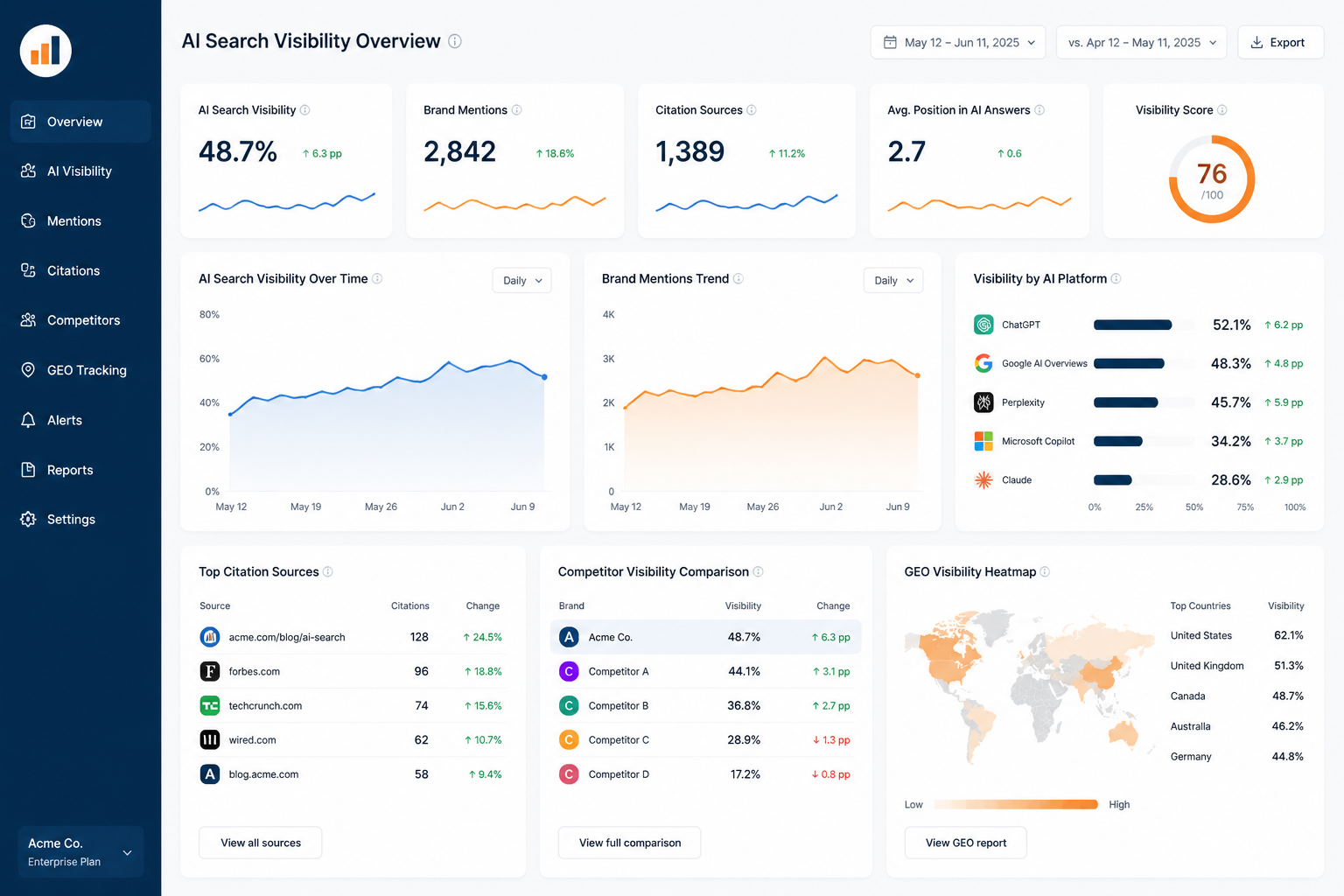
How To Measure Content Performance In AI Search
AI SEO measurement is still developing, but there are practical ways to track progress.
| Metric | What It Shows | Why It Matters |
|---|---|---|
| AI referral traffic | Visits from AI platforms where visible | Shows whether AI tools are sending users |
| Brand mentions in AI answers | Whether your brand appears in AI responses | Shows AI visibility and recognition |
| Citation frequency | How often your content is referenced | Shows source visibility |
| Organic clicks | Search traffic from Google | Shows traditional SEO performance |
| Search impressions | How often your pages appear in search | Shows visibility growth |
| Ranking movement | Keyword position changes | Shows SEO progress |
| Assisted conversions | SEO's role before a lead or sale | Shows business impact |
| Engagement metrics | Time on page, scroll depth, clicks | Shows content usefulness |
| Topic coverage | Number of useful pages around a topic | Shows topical depth |
Common Mistakes When Optimizing For ChatGPT & AI Overviews
Mistake 1: Writing Only For Keywords
AI search needs context, clarity and usefulness — not just keyword repetition.
Mistake 2: Publishing Thin AI-Written Content
Generic AI-written content often lacks original value.
Mistake 3: No Clear Answer Near The Top
If the answer is buried too deep, it becomes harder to extract.
Mistake 4: Weak Headings
Vague headings make content harder to understand.
Mistake 5: No Entity Clarity
If your brand, service, author or topic is unclear, AI systems may struggle to connect your content correctly.
Mistake 6: Ignoring Schema
Schema helps clarify page type, author, organization and FAQs.
Mistake 7: No Topic Cluster
One article is not enough to build authority on a competitive topic.
Mistake 8: No Trust Signals
Content without author information, reviews, case studies or proof can feel less reliable.
Mistake 9: Not Updating Content
AI search and Google search both benefit from fresh, maintained content.
Mistake 10: Not Tracking AI Visibility
If you do not track AI referrals, mentions or citations, you cannot understand progress.
90-Day Content Optimization Plan For AI Search
Days 1–30: Audit & Foundation
- Review current content
- Identify high-value pages
- Check technical SEO
- Review indexation
- Map core entities
- Check author information
- Review internal links
- Audit schema
- Check content depth
- Create AI visibility baseline
Days 31–60: Rewrite & Structure
- Rewrite priority service pages
- Add quick answers
- Improve H2/H3 structure
- Add FAQs
- Add comparison tables
- Add examples
- Add schema
- Improve internal links
- Add author bios
- Create supporting blog topics
Days 61–90: Authority & Measurement
- Publish topic cluster content
- Build brand mentions
- Add case studies
- Add reviews and proof
- Track AI referrals
- Test prompts in AI tools
- Monitor Search Console
- Refresh pages based on performance
- Improve pages that get partial visibility
AI Content Optimization Checklist
Use this checklist before publishing or updating content.
- Page has one clear topic
- H1 is specific
- Introduction explains the topic quickly
- Quick answer is included
- Key takeaways are included
- H2 headings match real user questions
- Each section starts with a direct answer
- Paragraphs are short
- Examples are included
- Tables are used where helpful
- FAQs are added
- Internal links are added
- Related service links are added
- Author bio is visible
- Updated date is shown
- Article schema is added
- FAQ schema is added where relevant
- Organization schema is present
- Content connects to a topic cluster
- Page is crawlable and indexable
- AI visibility is tracked after publishing
Final Thoughts
Optimizing content for ChatGPT and Google AI Overviews is not about tricking AI systems. It is about making your content clearer, more useful, more structured and easier to trust.
The best AI-optimized content answers questions directly, explains topics in depth, connects related entities, includes real examples and supports users with practical next steps.
Traditional SEO still matters. But in 2026, content also needs to be ready for AI-generated answers, summaries and recommendations. The brands that win will be the ones that build clear topic clusters, publish helpful content, strengthen trust signals and make their expertise easy for both humans and AI systems to understand.